What Is a UCC in Equipment Financing? (And Why Your Lender Files One)
If you’ve financed equipment, you’ve probably seen the letters “UCC” in your paperwork. Here’s what it is, why lenders file it, and what to watch for.
What is a UCC?
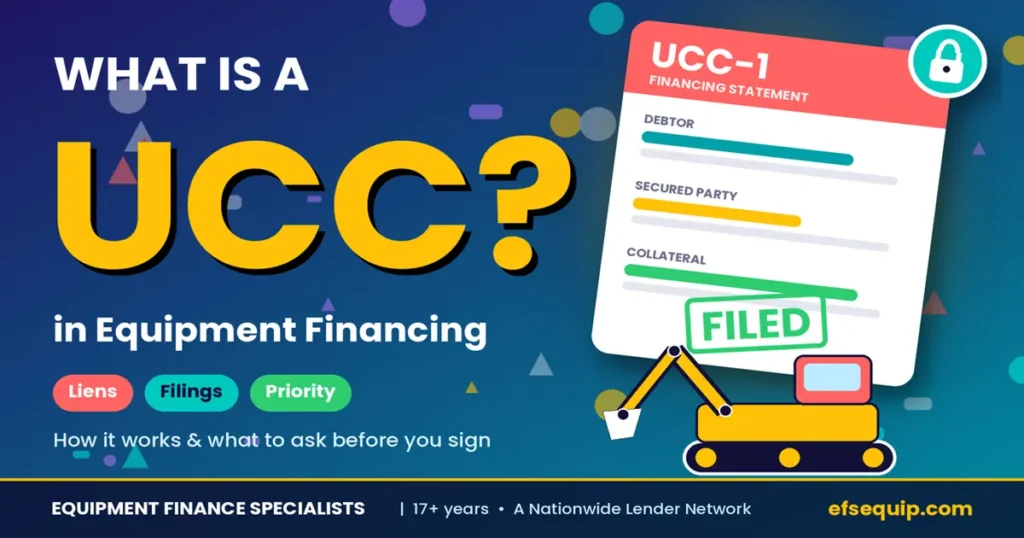
UCC stands for Uniform Commercial Code, the set of laws that governs commercial transactions in the U.S. In equipment financing, the term usually refers to a UCC-1 financing statement. It is a public notice that a lender has a security interest (a lien) in your equipment or other business assets.
It’s not a loan document, and it doesn’t mean you’re in trouble. It’s standard practice, and it’s how a lender protects its interest in the collateral.
How it works
- The lender files it, not you. You authorize the filing in your financing agreement.
- It’s filed with the Secretary of State where your business is registered. For sole proprietors, it’s generally the state where you live.
- It lists three things: the debtor (your exact legal name), the secured party (the lender or its representative), and the collateral.
- It lasts five years, even if your financing is for a shorter term. The lender can file a continuation to extend it, if necessary.
- When you pay off the financing, the lender should file a UCC-3 termination to release the lien. **You should request a UCC termination in writing from the finance company/lender soon after your final finance payment has been made, and then the lender generally has 20 days to comply.**
Why lenders file one
- Public notice. Anyone who searches the records sees there’s already a lien on the collateral.
- Priority. If you default, file for bankruptcy, or another creditor comes calling, the earlier filing generally wins. For equipment financing, timing matters: a lender who files promptly after you take possession typically gets priority over other creditors.
- Protection. Without a UCC, the lender’s claim to the equipment may not be enforceable against others.
Specific vs. blanket UCCs
A specific UCC describes only the financed equipment. A blanket UCC covers all of your business assets, including equipment, inventory, receivables, and cash.
Blanket liens are common, and they can make it harder to get additional financing later because your assets are already claimed. Read the collateral description before you sign, and ask for a specific description if one is reasonable.
Who’s actually named on the UCC?
Banks typically list their own name as the secured party. Many private lenders and leasing companies don’t. They often file under a representative, filing agent, or affiliated entity.
The Uniform Commercial Code allows this. A secured party of record can be the lender itself or its representative. The filing therefore may not show which institution is behind the financing.
That’s why it matters to ask your broker or lender directly: Who is the actual lender, and what exactly will the UCC cover?
Quick tips
- Ask what the UCC will cover before you sign.
- Search your own business’s UCC filings through your Secretary of State to see what’s on record.
- After your final finance payment, get the lender to confirm in writing that a UCC-3 termination was filed so you can get a UCC termination/release.
- Keep a copy of every UCC-related document.
Questions about UCCs or equipment financing?
At EFS-Equipment Finance Specialists, we put everything on the table up front: every fee, finance terms, & early payoff structure. With 17+ years of experience and a nationwide lender network, we’ll help you find financing that fits your business, with no contract surprises.
Click the Get Prequalified button or the Call button in the footer below to contact a Finance Specialist – we are happy to help!
This article is for general information and isn’t legal advice. Consult an attorney about your specific situation.